
Why Everyone Needs a Hobby Outside of Work (And Movies Are a Great Start)
Why do adults need hobbies outside of work? Discover how movies can become a meaningful hobby that reduces stress, sparks creativity, and introduces new stories, cultures, and ideas beyond everyday responsibilities.
2/9/20265 min read

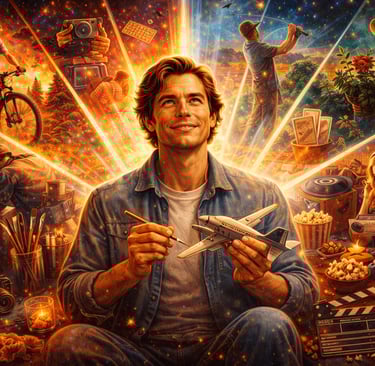
Adult life has a funny way of becoming predictable.
Wake up. Check your phone. Go to work. Answer emails. Handle responsibilities. Eat dinner. Watch something random for a while. Then repeat the whole process the next day.
Somewhere along the way, hobbies quietly disappear.
When people are younger, hobbies come naturally. Watching movies with friends, playing games, learning instruments, drawing, reading, exploring new interests—it all happens without much effort.
Then adulthood arrives.
Work becomes the main focus. Responsibilities multiply. Free time starts feeling like a rare resource instead of something you can enjoy freely.
So hobbies slowly fade into the background.
And that’s a problem.
Not because hobbies are necessary for productivity or career growth, but because they’re necessary for balance.
People need something in their lives that isn’t tied to work, stress, or responsibilities. Something that sparks curiosity, relaxation, or creativity.
That’s where hobbies come in.
And if you’re looking for a hobby that’s accessible, entertaining, and surprisingly meaningful, movies are a great place to start.
Watching movies might seem like simple entertainment, but when you approach films intentionally, they become much more than background noise.
They become stories, ideas, cultural windows, and creative inspiration—all rolled into one experience.
Why So Many Adults Stop Having Hobbies
Before talking about why hobbies matter, it’s worth understanding why so many adults stop having them in the first place.
The most obvious reason is time.
Work takes up a huge portion of the day. Then come errands, family responsibilities, commuting, and all the small tasks that fill the gaps between larger obligations.
By the time free time finally appears, many people feel too tired to start anything new.
Instead, they default to passive habits.
Scrolling social media. Watching random clips. Letting streaming platforms autoplay whatever comes next.
There’s nothing wrong with relaxing.
But passive habits don’t provide the same satisfaction as hobbies that engage your mind.
Another reason hobbies disappear is the pressure to always be productive.
Modern culture constantly pushes the idea that every moment should be used to improve something—your career, your finances, your health, your future.
Relaxation starts to feel like wasted time.
Ironically, this mindset often leads to burnout.
Without hobbies or creative outlets, life can begin to feel like an endless cycle of responsibilities.
That’s why hobbies matter more than people realize.
They restore balance.
Hobbies Give Your Brain a Break From Responsibility
Work demands constant focus.
Even if you enjoy your job, most careers require attention, decision-making, planning, and problem-solving.
Your brain spends hours thinking about deadlines, expectations, and responsibilities.
Over time, that kind of mental workload becomes exhausting.
Hobbies provide relief.
They shift your attention away from tasks and toward something enjoyable.
Movies do this especially well.
When you watch a great film, your mind becomes absorbed in the story. Characters face challenges, mysteries unfold, emotional moments appear unexpectedly.
Your attention moves away from real-life stress and into the narrative.
For a couple of hours, your brain relaxes.
This mental reset is surprisingly valuable.
People often return to work feeling refreshed after spending time engaged in something creative or entertaining.
In other words, hobbies don’t slow you down.
They help you recover.
Movies Are One of the Most Accessible Hobbies
Some hobbies require expensive equipment.
Others require lessons, travel, or long blocks of time.
Movies are different.
They’re incredibly accessible.
Streaming platforms provide instant access to thousands of films. Libraries offer free movie collections. Classic films appear on streaming services or public archives regularly.
All you really need is curiosity.
Movies also fit easily into busy schedules.
A film can be enjoyed after work, during a quiet weekend afternoon, or even as part of a weekly routine with friends or family.
Unlike hobbies that require preparation or specific environments, watching movies is flexible.
And that flexibility makes it easier to maintain over time.
Movies Introduce You to New Perspectives
One of the most interesting things about movies is their ability to show different perspectives.
Stories often explore experiences that viewers might never encounter in their own lives.
A historical drama might portray events from another era. A science fiction film might imagine future technologies and societies.
International films offer especially valuable perspectives.
Movies from South Korea, France, Spain, or Japan often approach storytelling differently than typical Hollywood productions.
Characters behave differently. Cultural values appear in subtle ways. The pacing of the story might feel slower or more reflective.
These differences expand your understanding of how people think and live around the world.
And that kind of cultural exposure happens naturally through storytelling.
You watch the movie, enjoy the story, and absorb new perspectives without realizing it.
Movies Spark Curiosity
A good hobby doesn’t just entertain you.
It makes you curious.
Movies often do exactly that.
After watching an interesting film, people frequently start asking questions.
Who directed this movie?
What other films has this actor made?
Are there similar movies with the same tone or style?
That curiosity can lead to fascinating discoveries.
Someone might start exploring classic cinema from the 1970s. Another viewer might develop an interest in international filmmaking.
Over time, watching movies evolves into something deeper.
It becomes an exploration of storytelling, creativity, and culture.
And that exploration keeps the hobby interesting.
Movies Create Shared Experiences
Another reason movies work well as a hobby is that they’re easy to share.
Watching a film with friends or family creates a shared experience.
People react together during surprising moments. They laugh at the same jokes. They debate the ending afterward.
These conversations often become the most memorable part of the experience.
A simple movie night can lead to long discussions about characters, themes, or unexpected plot twists.
Even disagreements can be fun.
Someone might love the ending while another person insists it ruined the entire film.
That back-and-forth creates connection.
Stories give people something meaningful to talk about beyond everyday routines.
Movies Can Inspire Creativity
Another surprising benefit of film appreciation is creativity.
Filmmakers constantly experiment with storytelling techniques, visual styles, music, and editing.
Watching movies exposes viewers to these creative choices.
You might notice how lighting changes the mood of a scene. Or how music transforms a simple moment into something emotional.
Some viewers become curious about how films are made.
They start reading about directors, cinematography, or screenwriting.
Others take it even further.
Some people begin writing movie reviews or discussing films online. Others develop interests in photography, editing, or storytelling.
A simple hobby can evolve into a creative outlet.
And creativity is something many adults miss once work routines take over daily life.
Stories Help Us Understand Real Life
Movies are fictional, but the themes they explore often reflect real life.
Stories frequently focus on universal experiences.
Ambition. Failure. Friendship. Love. Loss. Personal growth.
Watching characters navigate these challenges can be surprisingly meaningful.
Sometimes a film arrives at exactly the right moment.
A character’s journey might mirror something happening in your own life.
Or a story might offer a new way of thinking about a difficult situation.
Movies don’t provide perfect answers.
But they can offer insight.
And sometimes insight is exactly what people need.
Turning Movie Watching Into a Real Hobby
If you want movies to become a meaningful hobby instead of background entertainment, a few simple habits help.
First, explore different genres.
Don’t watch the same type of movie every time. Try thrillers, documentaries, dramas, comedies, and international films.
Second, pay attention to the creative elements.
Notice the acting, music, cinematography, and pacing of the story.
These details make films more interesting.
Third, talk about movies with other people.
Discussions often reveal perspectives you might not have noticed.
The more curious you become, the more enjoyable the hobby becomes.
Final Thoughts
Adult life often becomes dominated by responsibilities.
Work schedules, bills, errands, and daily obligations fill most of the week.
That’s why hobbies matter.
They create space for curiosity, creativity, and relaxation.
Movies offer one of the easiest ways to reintroduce that balance.
They entertain, inspire, and connect people through shared stories.
And sometimes the right film can remind us why storytelling has always been such an important part of human life.
So if work has slowly taken over all your free time, consider bringing back a hobby.
Movies are a great place to start.
Press play.
You might discover something more meaningful than you expected.