
The Best Streaming Devices in 2026: Roku vs Fire Stick vs Apple TV
Looking for the best streaming device in 2026? Compare Roku, Amazon Fire Stick, and Apple TV to see which platform offers the best performance, features, and value for your home entertainment setup.
2/16/20266 min read
Streaming movies used to be simple.
You opened Netflix, picked something interesting, and pressed play. That was basically the entire experience.
Today it’s a little more complicated.
Between Netflix, Disney+, Prime Video, Hulu, Max, YouTube, Apple TV+, and a growing list of niche streaming services, the average living room now looks more like a small entertainment hub.
Most modern TVs try to handle this with built-in apps, but anyone who has used a smart TV for more than a year knows the truth.
Built-in TV software often feels slow.
Menus lag. Apps crash. Updates arrive months late—if they arrive at all.
That’s why streaming devices still matter in 2026.
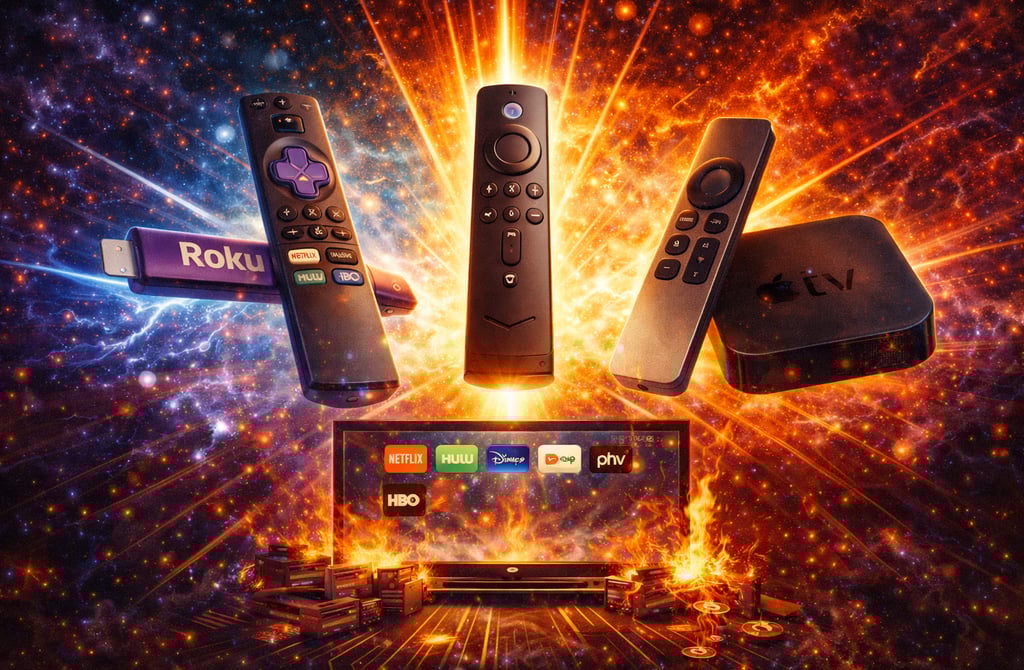
Devices like Roku, Amazon Fire Stick, and Apple TV turn almost any television into a fast, organized streaming machine. They improve navigation, support more apps, and often deliver better video and audio performance than a TV’s built-in system.
But choosing the right one isn’t always obvious.
Each platform takes a slightly different approach to streaming. Some prioritize simplicity. Others focus on smart home integration or premium performance.
So if you’re thinking about upgrading your movie setup this year, here’s a clear look at the three biggest streaming platforms—and which one might actually work best for you.
Why Streaming Devices Still Matter (Even With Smart TVs)
At first glance, it might seem like streaming devices are becoming unnecessary.
Most modern TVs already include Netflix, YouTube, and several other apps built into the system.
So why buy another device?
The answer comes down to performance, updates, and usability.
Smart TV software is often developed by television manufacturers whose main focus is hardware, not software.
As a result, those built-in systems tend to age quickly.
Menus become slower. App support sometimes disappears. And updates are far less frequent than on dedicated streaming platforms.
Streaming device companies, on the other hand, focus almost entirely on improving the viewing experience.
They release regular software updates, improve navigation, and add new features over time.
That means a good streaming device can keep your TV feeling modern long after the original smart software starts to struggle.
And if you watch movies or shows frequently, that smoother experience makes a noticeable difference.
Roku: The Simplicity Champion
Roku has built its reputation on one idea: keep things simple.
The Roku interface is one of the easiest streaming systems to understand. Everything is organized in a straightforward grid of apps, and navigating the menu rarely requires more than a few button presses.
For many users, that simplicity is exactly what makes Roku appealing.
Instead of pushing specific services aggressively, Roku treats streaming platforms more equally. Netflix sits next to Disney+, which sits next to Hulu or Prime Video.
No single service dominates the screen.
This neutral approach gives the platform a very practical feel.
You turn on the device, choose the app you want, and start watching.
No unnecessary complications.
Roku Strengths: Easy, Affordable, and Reliable
One of Roku’s biggest advantages is accessibility.
Most Roku devices are affordable, which makes them an easy upgrade for almost any TV setup. Even the higher-end Roku models usually cost less than premium streaming boxes from other companies.
That affordability doesn’t mean the experience feels cheap.
Roku devices support 4K streaming, HDR formats, and a huge library of apps.
In fact, Roku often supports smaller niche streaming services earlier than other platforms.
That wide app support makes it a great choice for people who subscribe to multiple services.
Another highlight is the remote control.
Roku remotes are famously simple.
They usually include a directional pad, a few essential buttons, and quick shortcuts to popular streaming services. There’s very little learning curve, which makes the platform especially friendly for users who prefer technology that just works.
For viewers who want a device that disappears into the background and lets them focus on the movie, Roku does that extremely well.
Roku Weaknesses: Simple Can Also Mean Basic
The same simplicity that makes Roku appealing can occasionally feel limiting.
Customization options are minimal, and advanced users might wish for more control over recommendations, menus, or system behavior.
Another factor is performance differences between models.
Lower-cost Roku devices can feel slightly slower when navigating menus or switching between apps.
The higher-end Roku models solve most of those issues, but it’s something worth considering when choosing a device.
Still, for the majority of viewers, Roku delivers exactly what they want: a reliable, easy-to-use streaming experience.
Amazon Fire Stick: Built for the Amazon Ecosystem
Amazon’s Fire TV Stick takes a different approach.
Instead of focusing purely on simplicity, the Fire TV platform integrates heavily with Amazon’s broader ecosystem.
Prime Video content appears prominently throughout the interface, and voice control through Alexa plays a big role in navigation.
For people who already use Amazon devices, this integration can be incredibly convenient.
You can search for movies with voice commands, launch apps without touching the remote, and even control smart home devices like lights or thermostats.
It turns the streaming device into a small part of a much larger digital ecosystem.
Fire Stick Strengths: Voice Control and Smart Home Integration
One of the most useful Fire TV features is Alexa voice search.
Instead of slowly typing movie titles using the remote, you can simply say the name of a film or show.
Alexa will find it across multiple streaming services.
That sounds like a small feature, but it actually saves time when browsing.
Fire TV also integrates naturally with other Amazon products.
If you own Alexa speakers, smart lights, or other connected devices, the Fire Stick can act as a central control point for your living room.
You can dim the lights, start a movie, and adjust the volume using simple voice commands.
For households already using Amazon’s ecosystem, this convenience can be a major advantage.
Fire Stick Weaknesses: A Very Amazon-Focused Interface
The biggest criticism of Fire TV devices usually involves the interface.
Amazon promotes its own content heavily.
Prime Video recommendations appear throughout the home screen, sometimes pushing other services further down the menu.
For viewers who primarily use Prime Video, this isn’t a problem.
But for people who prefer Netflix or other platforms, the layout can feel slightly biased.
Some users also find the interface visually busy compared to Roku’s cleaner design.
Still, the Fire Stick remains a powerful and flexible streaming option, especially for those already invested in Amazon services.
Apple TV: The Premium Streaming Experience
Apple TV approaches streaming from a different angle.
Where Roku focuses on simplicity and Fire TV focuses on ecosystem integration, Apple emphasizes performance and polish.
Apple TV devices are designed to feel fast, responsive, and visually refined.
Menus glide smoothly. Apps launch instantly. Video playback remains consistent even during high-quality 4K streaming.
If you already use Apple products like iPhones, iPads, or MacBooks, the integration becomes even more convenient.
For example, you can easily mirror content from your phone to the TV or control playback through Apple’s ecosystem.
Apple TV Strengths: Speed, Quality, and Ecosystem Integration
The biggest advantage of Apple TV is speed.
Apple includes powerful processors in its streaming devices, which keeps the system running smoothly even after years of updates.
That performance becomes noticeable when navigating menus, switching between apps, or streaming high-quality video formats.
Apple also focuses heavily on video and audio quality.
The device supports premium formats like Dolby Vision and Dolby Atmos, which can dramatically improve picture and sound if your TV and audio system support them.
Another benefit is Apple’s clean interface design.
The menus are simple, visually appealing, and relatively free of aggressive advertising.
For viewers who want a streaming device that feels polished and powerful, Apple TV delivers that experience.
Apple TV Weaknesses: The Price
The main downside of Apple TV is cost.
Compared to Roku and Fire Stick devices, Apple TV usually sits in a much higher price range.
For viewers who only want basic streaming access, that price difference may feel unnecessary.
But for users who value speed, premium video quality, and integration with Apple’s ecosystem, the investment can make sense.
Apple TV is less about affordability and more about delivering a high-end streaming experience.
Which Streaming Device Is Actually Best?
The answer depends on what matters most to you.
If you want simplicity and affordability, Roku is hard to beat.
If you like voice controls and smart home integration, the Fire Stick fits naturally into Amazon’s ecosystem.
If you want top-tier performance and a polished interface, Apple TV offers the most premium experience.
The good news is that streaming technology has improved so much that none of these options are bad.
Each platform can deliver smooth streaming, strong app support, and excellent picture quality.
The differences mostly come down to preferences.
Final Thoughts
Streaming has completely transformed how people watch movies and TV shows.
Instead of flipping through cable channels, viewers now have access to thousands of films and shows on demand.
Streaming devices make navigating that world much easier.
They organize apps, improve performance, and simplify the process of finding something worth watching.
Whether you choose Roku, Fire Stick, or Apple TV, the goal is the same.
Sit down, pick a movie, and enjoy the experience.
Because at the end of the day, the best streaming device is simply the one that helps you get to a great movie faster.